Practical guidance from CPA Ashish Gupta on tax planning, accounting and financial planning.
Personal Tax Return (T1) – What You Need to Know Before Filing
Tax Filing · By Ashish Gupta, CPA | CGA
Filing your annual T1 Income Tax and Benefit Return is more than simply reporting your employment income. Your tax return brings together your different sources of income, eligible deductions, tax credits, taxes already paid and other information that determines whether you have a refund or balance owing.
Being organized before you file can help make the process smoother, reduce the risk of missing deductions or credits, and avoid having to amend your return later.
What Documents Should You Gather?
The documents you need depend on your personal financial situation. Before filing, consider all the income you earned during the year as well as expenses, deductions and credits that may apply to you.
Employment & Other Income
Depending on your situation, you may receive:
T4 – Employment income, tax deducted, CPP and EI
T4A – Pension, retirement, annuity and certain other income
T4E – Employment Insurance benefits
T4A(P) – Canada Pension Plan benefits
T4A(OAS) – Old Age Security benefits
T5007 – Workers' compensation or social assistance benefits
Most tax slips are generally issued by employers, financial institutions and other issuers by the end of February. CRA recommends making sure you have all necessary slips and documents before filing.
Investment Income
If you have savings or investments, gather documents such as:
A T5008 alone may not contain everything needed to accurately calculate your capital gain or loss. Keeping your own investment purchase and sale records can therefore be important.
Self-Employment or Business Income
If you operate a sole proprietorship, work as a freelancer or earn business income, keep records of:
Sales and business income
Invoices and payment records
Advertising and marketing
Office expenses and supplies
Professional fees
Business insurance
Telephone and internet expenses
Vehicle expenses and mileage records
Business-use-of-home expenses
Equipment and asset purchases
Other expenses incurred to earn business income
Good record-keeping throughout the year makes preparing your return much easier and helps support expenses if CRA asks for documentation.
Rental Income
Rental property owners should maintain records of:
Rental income received
Property taxes
Mortgage interest
Insurance
Utilities
Repairs and maintenance
Property management fees
Professional fees
Advertising
Other eligible rental expenses
Details of major renovations or capital expenditures
Keep the purchase and sale documents for the property as well, since they may eventually be required to calculate a capital gain or loss.
Don't Forget Your Deductions & Tax Credits
Your income slips are only one side of the tax return. Depending on your circumstances, deductions and credits may reduce your taxable income or the amount of tax you ultimately pay. Consider gathering documents for:
RRSP Contributions • Child-Care Expenses • Employment Expenses • Professional or Union Dues • Moving Expenses • Support Payments • Investment Carrying Charges • Medical Expenses • Charitable Donations • Tuition (T2202) • Home Office Expenses, where eligible
Some deductions and credits have detailed eligibility requirements, so having a receipt does not automatically mean the amount can be claimed.
You should also let your tax preparer know about major changes during the year, such as:
Marriage, separation or divorce
Birth of a child
Purchase or sale of a home
Sale of investments or rental property
Starting or closing a business
Moving for employment or education
Becoming or ceasing to be a Canadian resident
Significant foreign assets or foreign income
These events can affect more than just the income reported on your T1.
When Is Your Personal Tax Return Due?
For the 2025 tax year, most individuals were required to file their T1 return by April 30, 2026.
If you or your spouse/common-law partner were self-employed, the filing deadline was June 15, 2026. However, any balance owing for 2025 was still due by April 30, 2026.
This distinction is important: Filing deadline and payment deadline are not always the same. Even when you have additional time to file because of self-employment, you may still need to estimate and pay your tax by April 30 to avoid interest.
What If You Have Tax to Pay?
Your T1 return calculates your total tax liability and compares it with income tax already deducted or paid during the year. The result will generally be either:
Refund – You paid more tax during the year than your final tax liability. Balance Owing – You still have additional tax to pay.
For 2025 personal income taxes, a balance owing was generally due by April 30, 2026. CRA charges compound daily interest on an unpaid balance beginning after the payment deadline and continuing until the balance is paid.
If you regularly have a significant amount of tax owing — for example, because of self-employment, rental or investment income — you may also be required to make income tax instalments during the year. CRA generally uses quarterly instalment dates of March 15, June 15, September 15 and December 15 for individuals required to pay by instalments.
What Happens If You File Late?
If you file your tax return late and have a balance owing, CRA's standard late-filing penalty is:
5% of the balance owing + 1% for each full month the return is late, up to 12 months.
A higher repeated late-filing penalty can apply in certain circumstances where you were previously charged a late-filing penalty and CRA issued a demand to file. Interest may also continue to accumulate on unpaid tax.
This is why an important rule of thumb is: File on time even if you cannot pay the full balance immediately.
Filing on time can avoid the late-filing penalty even though interest may still apply to the unpaid balance. CRA also notes that filing late can delay certain benefit and credit payments.
Failing to file when required can have more serious consequences. CRA may eventually assess tax based on the information available to it, and such an assessment may not include deductions that you could otherwise have claimed because CRA may not have the facts needed to determine them.
Before You File – A Simple Checklist
Before submitting your T1, make sure you have considered:
All Income Reported
Tax Slips Collected
Investment Transactions Reviewed
Business or Rental Expenses Organized
RRSP Contributions Included
Medical & Donation Receipts Reviewed
Tuition & Child-Care Expenses Considered
Major Life Changes Reported
Foreign Income or Assets Considered
Direct Deposit & Personal Information Updated
A Little Preparation Can Make Tax Filing Easier
Your personal tax return should reflect your complete financial picture, not just the tax slips available in your CRA account.
Keeping your records organized and discussing changes in your income, investments, business activities and personal circumstances with your tax professional can help ensure your return is prepared accurately and that eligible deductions and credits are considered. Get professional assistance with your T1 return, tax planning and CRA matters so you can file with confidence and stay on top of your tax obligations.
This article provides general information only and should not be considered personalized tax, legal or financial advice. Tax rules and eligibility requirements depend on individual circumstances.
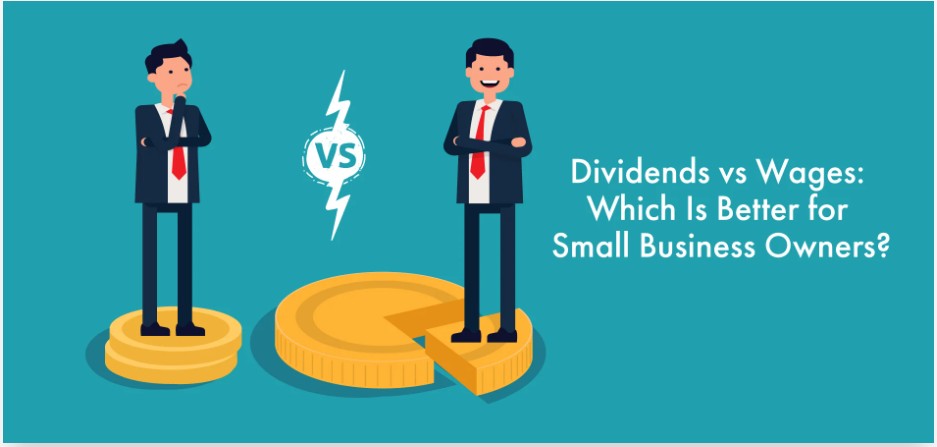
Salary vs. Dividends: How Should You Pay Yourself From Your Corporation?
4 min read · Tax & Business Planning · By Ashish Gupta, CPA | CGA
If you own a corporation and work in the business, one important question comes up every year: Should I pay myself a salary, dividends, or a combination of both?
There isn't a universal answer. While dividends may sometimes result in lower immediate personal taxes and avoid CPP contributions, salary can create RRSP contribution room, CPP participation and predictable personal income. Your decision can also affect how much money remains inside the corporation for future business growth.
For an owner-managed corporation, the better strategy is often about balancing today's taxes with tomorrow's business and personal financial goals.
How Does Salary Work?
When your corporation pays you a salary, you are receiving employment income. The corporation can generally deduct a reasonable salary paid to an employee in calculating its taxable income, reducing the income on which the corporation pays tax.
You report the salary as employment income on your personal tax return and pay personal income tax based on your applicable tax rate. Salary also generally involves payroll administration, including source deductions and CPP contributions.
Why Consider Salary?
One of the biggest long-term advantages is the RRSP contribution room. CRA calculates new RRSP room using earned income, subject to the annual limit and other adjustments. Employment earnings are included in earned income.
Salary can therefore help an owner build an RRSP room and accumulate retirement savings outside the corporation. Salary also generally results in CPP contributions. While this increases your current cash cost because both employee and employer CPP contributions may apply, CPP can provide retirement, disability and survivor benefits.
Key advantages of salary: corporate tax deduction, RRSP room, CPP participation and a regular record of employment income.
Key challenges: personal income tax, CPP costs and additional payroll administration.
How Do Dividends Work?
A dividend is different. You receive dividends because you are a shareholder, rather than as compensation for services performed for the corporation. CRA specifically describes dividends as a return on a shareholder's investment in the company.
Unlike salary, dividends are generally paid from the corporation's after-tax profits and do not provide the corporation with the same deduction as salary. The shareholder reports taxable Canadian dividends on their personal tax return. Canada's dividend gross-up and dividend tax credit system is designed to recognize that corporate tax has already been paid on the underlying income.
Depending on the corporation's tax position, a dividend may be an eligible or non-eligible dividend, and the tax treatment differs. A corporation's ability to pay eligible dividends depends on its circumstances and tax accounts.
Why Consider Dividends?
Dividends generally don't attract CPP contributions, which can reduce the immediate cash cost of taking money from your corporation. They can also be administratively simpler than running regular payroll.
However, dividend income itself doesn't generate new RRSP contribution room because CRA's definition of earned income includes employment and self-employment earnings but not dividend income.
Key advantages of dividends: no CPP contributions, potentially lower immediate cash cost and relatively simple administration.
Key challenges: no corporate deduction, no new RRSP room from the dividends, and no CPP contributions toward future CPP benefits.
Salary vs. Dividend at a Glance
Salary
Dividend
Corporate tax deduction
Generally yes
No
Personal income tax
Yes
Yes, under dividend tax rules
CPP contributions
Generally yes
No
Creates RRSP room
Yes, subject to limits
No
Payroll required
Yes
No regular payroll
T4 required
Generally yes
Generally T5
Supports CPP benefits
Yes
No
Leaves flexibility in compensation planning
Yes
Yes
Which Is Better From a Tax Perspective?
This is where the answer becomes more interesting. It can be tempting to compare only the personal tax payable on $100,000 of salary with the personal tax payable on $100,000 of dividends.
But that isn't a complete comparison. Salary is generally deductible to the corporation, while a dividend is paid from income that has already been subject to corporate tax.
Canada's tax system uses the dividend gross-up and tax credit mechanism with the objective of reducing double taxation and moving toward tax integration, broadly, trying to produce a similar combined corporate and personal tax burden whether business income is earned directly or through a corporation and distributed as dividends.
In practice, the result isn't perfectly identical in every situation. Your answer can change based on: your personal income, the corporation's taxable income, eligible vs. non-eligible dividends, CPP costs, available RRSP room, and other income and deductions.
Therefore, saying "dividends are always more tax-efficient" or "salary is always better" can be misleading. The comparison should look at the combined corporate and personal position.
What About Long-Term Personal Wealth?
This is where salary can sometimes have an advantage that isn't obvious from a one-year tax calculation. Suppose you consistently take only dividends for many years.
You may save CPP contributions today, but you aren't building CPP benefits through those dividend payments. You also aren't creating RRSP room from those dividends.
By comparison, taking some salary can create RRSP room that can be used to build investments personally. Deductible RRSP contributions can reduce taxable income, while investment income inside an RRSP generally grows tax-deferred until withdrawal.
The decision therefore isn't simply: "Which option gives me the lowest tax bill this year?" It can also be: "Where do I want my wealth to accumulate over the next 10–20 years?" Inside the corporation? In RRSPs and TFSAs? Through CPP? Or across several of these?
What About Growing the Business?
Another option is sometimes overlooked: you don't necessarily need to withdraw all of the corporation's profits.
If your business earns substantially more than you need personally, you may choose to withdraw enough for your lifestyle and personal financial goals while retaining some after-tax profits inside the corporation.
Those funds may potentially support working capital, hiring, equipment, marketing, expansion and future business opportunities.
This can be particularly relevant for a growing business. But retaining money in a corporation shouldn't automatically be viewed as a permanent tax-saving strategy. Corporate investment income has its own tax rules, and accumulating substantial passive investments inside a Canadian-controlled private corporation can have additional tax consequences.
The decision should therefore consider both business requirements and personal wealth planning.
Is a Combination of Salary and Dividends Better?
For many owner-managers, this is worth considering. Instead of treating the decision as Salary OR Dividends, you can consider Salary + Dividends + Retained Corporate Profits.
For example, an owner may choose a salary at a level that supports personal cash flow and desired RRSP room, use dividends for additional distributions where appropriate, and leave some profits in the corporation to fund future business needs.
That creates three potential pools of wealth: personal investments, retirement savings, and business/corporate assets.
The Takeaway
The best compensation strategy isn't necessarily the one that produces the lowest personal tax bill this year. Salary may mean CPP costs and potentially higher immediate personal taxes, but it can create RRSP room, contribute toward CPP benefits and provide deductible compensation to the corporation.
Dividends can offer flexibility and avoid CPP contributions, but they don't create RRSP room and are paid from corporate after-tax profits.
For a growing business owner, a thoughtful combination of salary, dividends and retained corporate profits can sometimes provide greater flexibility than automatically choosing only one method.
The right question is therefore not simply: "Salary or dividend — which has less tax?" It is: "How should I pay myself while balancing taxes, personal wealth and the long-term growth of my business?"
Your compensation strategy should work alongside your corporate taxes, personal taxes, retirement planning and business growth objectives.
This article is for general educational and informational purposes only and does not constitute personalized tax, accounting, investment or financial advice. Salary and dividend taxation depends on your income, province of residence, corporation's tax position and individual circumstances. Consult an appropriately qualified professional before implementing a compensation strategy.
Setting Up a New Business: Sole Proprietorship, Partnership or Corporation?
3–4 min read · Business & Tax · By Ashish Gupta, CPA | CGA
Starting a new business in Ontario involves more than choosing a name and finding customers. One of the first — and most important — decisions is choosing the right business structure.
For most small-business owners, the three structures to consider are: Sole Proprietorship | Partnership | Corporation.
Your choice affects how you register the business, pay taxes, report income, protect yourself from liabilities and manage future growth. Ontario also recognizes other structures, such as co-operatives, but this article focuses on the three most common choices for small businesses.
1. Sole Proprietorship
A sole proprietorship is an unincorporated business owned by one individual. It is generally the simplest structure for someone starting a business on their own.
From a tax perspective, you and the business are not separate taxpayers. Business income or loss is generally reported on your personal T1 Income Tax and Benefit Return, usually using Form T2125 – Statement of Business or Professional Activities.
Benefits
Simple and inexpensive to establish
Full control of the business
Simple business structure
Business losses may offset other personal income, subject to tax rules
Challenges
Unlimited personal liability
Personal assets may be exposed to business liabilities
No separate legal status
Business profits taxed as personal income
A sole proprietorship can therefore be attractive for someone starting small, operating independently and looking for a relatively simple structure.
2. Partnership
A partnership is generally a business relationship between two or more people or entities carrying on a business together. Partners may contribute money, property, labour or expertise and share the profits or losses according to their arrangement.
Although a partnership can arise without a formal written agreement, having a proper partnership agreement is generally advisable. It can establish how profits are divided, how decisions are made and what happens when a partner joins or leaves.
For income-tax purposes, the partnership itself generally does not pay income tax like a corporation. Instead, income or losses are allocated to the partners and reported on their respective tax returns. Certain partnerships are also required to file a T5013 Partnership Information Return.
Benefits
Simple to establish
Combines capital and expertise
Shared business costs
Shared responsibilities
Flexible profit sharing
Challenges
Personal liability for business debts and losses
Partners may bind the partnership
Potential disagreements between partners
Shared decision-making
Possible conflicts over profit sharing and business direction
3. Corporation
A corporation is a separate legal entity from its shareholders. It can own property, enter into contracts and conduct business in its own name.
In Ontario, you can generally choose between provincial or federal incorporation, depending on your circumstances and plans. A corporation files its own T2 Corporation Income Tax Return and pays corporate income tax on its taxable income.
Benefits
Limited liability protection
Business continuity independent of owners
Easier transfer of ownership
Greater flexibility to raise capital
Potential tax-planning opportunities
Challenges
Higher setup and ongoing costs
More complex administration
Separate accounting and corporate tax requirements
Corporate record-keeping requirements
Annual corporate filing requirements
Ontario Annual Return filing within six months of fiscal year-end
Incorporation can therefore become particularly relevant when a business is growing, retaining profits, adding shareholders, seeking financing or looking for a more formal business structure. Whether it produces a tax advantage depends on the owner's and corporation's specific circumstances.
How Do the Three Structures Compare?
Sole Proprietorship
Partnership
Corporation
Owners
One
Two or more
One or more shareholders
Separate legal entity
No
Generally no
Yes
Income tax
Owner's personal return
Income allocated to partners
Corporation pays its own tax
Main tax filing
T1 + T2125
Partners' returns + T5013 where required
T2
Setup
Simple
Relatively simple
More formal
Liability
Personal exposure
Partners can have personal exposure
Generally limited for shareholders
Ongoing administration
Lower
Moderate
Higher
Suitable for
Individual/smaller businesses
Businesses with multiple owners
Businesses seeking a separate legal structure and greater flexibility
The appropriate structure depends on more than tax alone. Liability exposure, expected profits, number of owners, financing requirements and future plans should all be considered.
What Do You Need to Set Up a Business in Ontario?
The exact requirements depend on the structure and nature of the business, but a typical setup may include:
Choosing your business structure — sole proprietorship, partnership or corporation.
Choosing and registering your business name where required. Ontario notes that a sole proprietorship generally needs registration if it operates under a name other than the owner's own name.
Registering or incorporating through the Ontario Business Registry, where applicable. The OBR handles registrations, incorporations and updates for Ontario businesses.
Obtaining a CRA Business Number and applicable program accounts, depending on the business. Not every business automatically needs every CRA program account.
GST/HST registration, if required — or voluntarily if eligible.
Payroll account registration if you will have employees and the account is required.
Business licences or permits, depending on your industry and municipality.
Opening appropriate business banking and establishing bookkeeping records so business transactions are properly tracked from the beginning.
If you incorporate an existing sole proprietorship or partnership later, remember that the corporation is a new legal entity. CRA notes that incorporation generally results in a new Business Number, and GST/HST or payroll accounts associated with the old business are not automatically transferred to the new corporation.
Which Structure Should You Choose?
There isn't one structure that is right for every business. Someone starting a small consulting or service business alone may prefer the simplicity of a sole proprietorship.
Two people starting a business together may consider a partnership, with a properly drafted partnership agreement.
A business expecting significant profits, growth, additional shareholders or greater liability exposure may consider whether a corporation better fits its longer-term plans.
The important point is to think beyond the cost of registration. Consider taxation, liability, ownership, expected profits, how much money you need personally, future growth and your eventual exit strategy before deciding.
The Takeaway
Setting up your business correctly from the beginning can save considerable time and expense later. Before registering, understand the differences between a sole proprietorship, partnership and corporation and consider how each structure affects both your current situation and your future plans.
Your business structure can always evolve as the business grows — but choosing thoughtfully at the beginning gives you a stronger foundation.
Ready to Start Your Business?
Professional guidance can help you choose an appropriate structure, complete the necessary registrations and establish your accounting and tax compliance from day one.
This article is for general educational and informational purposes only and does not constitute tax, accounting, legal or financial advice. Business structures can have different tax and legal consequences depending on individual circumstances. Consider obtaining professional tax and legal advice before establishing or restructuring a business.
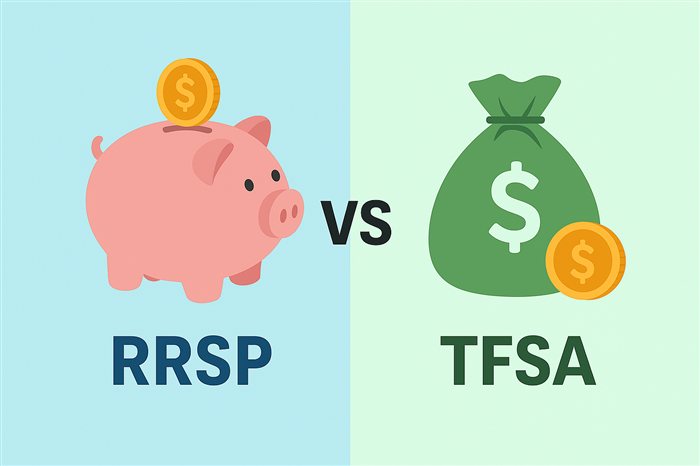
TFSA vs. RRSP: Which One Should You Prioritize?
5–6 min read · Financial Planning · By Ashish Gupta, CPA | CGA
If you are trying to build wealth in Canada, two accounts are likely to come up again and again: the Tax-Free Savings Account (TFSA) and the Registered Retirement Savings Plan (RRSP).
Both offer valuable tax advantages, and both can play an important role in long-term financial planning. But they work very differently. So, if you have limited money available to invest each month, should you prioritize your TFSA or your RRSP?
There isn't one answer that works for everyone. Your income, tax rate, financial goals, time horizon and expected retirement income can all influence the decision.
First, Understand the Main Difference
The easiest way to think about the two accounts is:
TFSA = contribute with after-tax money and generally withdraw tax-free. RRSP = potentially receive a tax deduction today and generally pay tax when you withdraw later.
With a TFSA, your contributions aren't tax-deductible. However, investment income and capital gains earned inside the account are generally tax-free, and withdrawals are generally tax-free as well.
With an RRSP, eligible contributions can be deducted from your taxable income. Investments can grow inside the account without being taxed annually, but amounts withdrawn are generally included in your taxable income.
That difference is at the heart of deciding which account to prioritize.
When an RRSP May Make More Sense
An RRSP can be particularly attractive when you are currently earning a higher income and paying tax at a relatively high marginal rate. Imagine you are earning $130,000 today and expect your taxable income to be substantially lower after retirement.
Making an RRSP contribution could provide a meaningful tax deduction today. Your investments can then grow inside the RRSP, and you generally pay tax when you eventually withdraw the money.
If your tax rate when you withdraw the funds is lower than the tax rate at which you received the original deduction, the RRSP can be particularly effective. But there is an important planning point here: the tax refund itself shouldn't be the entire reason for contributing to an RRSP.
A refund isn't free money. It generally results from reducing your taxable income through the RRSP deduction. Consider using that refund toward additional savings, investments or other financial priorities rather than simply spending it.
When a TFSA May Make More Sense
A TFSA can be especially useful when you are earlier in your career, currently in a lower tax bracket, or want greater flexibility with your money. Suppose you are earning $50,000 today but expect your income to increase considerably over the next several years.
Using a TFSA room today could make sense because the tax deduction from an RRSP contribution may be more valuable to you in a future higher-income year.
The TFSA also offers considerable withdrawal flexibility. You can generally withdraw money without adding the withdrawal to your taxable income. The amount withdrawn is added back to your TFSA contribution room at the beginning of the following calendar year.
That can make a TFSA useful for goals beyond retirement, such as building long-term wealth while maintaining access to your money.
TFSA vs. RRSP at a Glance
TFSA
RRSP
Contributions tax-deductible?
No
Generally, if deductible
Investment growth taxed annually?
Generally no
Generally no while inside the plan
Regular withdrawals taxable?
Generally no
Generally yes
Withdrawals restore contribution room?
Yes, the following calendar year
Generally no
Useful for retirement?
Yes
Yes
Useful for other financial goals?
Very flexible
Primarily designed for retirement
Why Your Income Matters
One of the biggest mistakes people can make is choosing an account simply because someone told them: "Always max out your RRSP first." Or: "TFSA is always better because withdrawals are tax-free."
Neither statement considers your individual circumstances. Consider two people who are the same age and have the same amount available to invest.
One earns $45,000 and expects their income to rise significantly. The other earns $160,000 and expects considerably lower taxable income during retirement.
Even though both individuals have access to a TFSA and RRSP, the relative tax benefits may be quite different. This is why tax planning and financial planning should work together.
Can You Use Both?
Absolutely — and for many Canadians, this may ultimately be the better question. Instead of asking "TFSA or RRSP?", consider asking: "How should I allocate my savings between my TFSA and RRSP?"
For example, someone might contribute enough to an RRSP to achieve a particular tax-planning objective and then direct additional savings toward a TFSA. Another person may prioritize their TFSA during lower-income years and increase RRSP contributions as their income rises.
Unused contribution room can also carry forward, subject to the applicable rules. TFSA contribution room accumulates for eligible Canadian residents, while RRSP deduction room is generally linked to earned income and other factors.
For 2026, the annual TFSA dollar limit is $7,000, although your actual available contribution room may be higher or lower depending on your history.
So, Which One Should You Prioritize?
Rather than applying a universal rule, consider these questions:
What is my taxable income today?
Do I expect my income to increase or decrease in the future?
What could my taxable income look like during retirement?
Am I saving strictly for retirement or might I need access to the money earlier?
Do I have unused TFSA or RRSP room?
Am I saving for my first home?
How do these accounts fit with my overall tax and retirement strategy?
For someone currently in a lower tax bracket with higher income expected later, prioritizing the TFSA can sometimes be attractive. For someone in a higher tax bracket today who expects a lower tax rate in retirement, an RRSP contribution can sometimes be particularly valuable. And for many people, the appropriate strategy may involve using both.
The Takeaway
A TFSA and RRSP shouldn't necessarily be competitors. They are two different financial-planning tools, and each has advantages depending on when you contribute, your tax situation, what you're saving for and how you eventually plan to use the money.
The goal isn't simply to choose the account with the biggest immediate tax benefit. It's to develop a strategy that connects your tax planning, investments and long-term financial goals.
A financial assessment can help you understand your current position and develop a strategy around your tax situation, investment goals and retirement plans.
This article is provided for general educational and informational purposes only and should not be considered personalized tax, investment or financial advice. Tax rules and individual circumstances vary. Consult an appropriately qualified professional before making financial or investment decisions.